
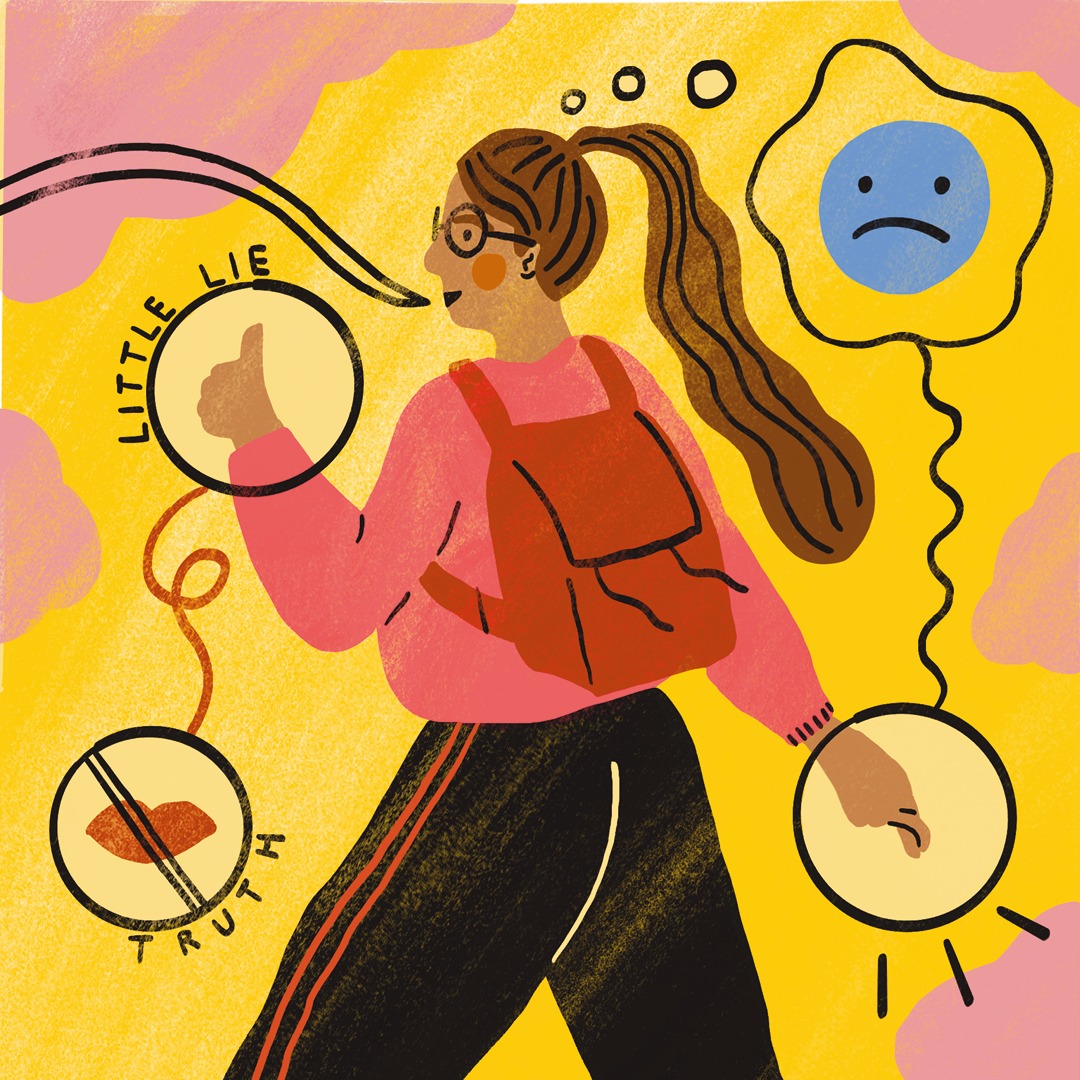
There are many times when telling a little lie seems like the easiest thing to do to keep the peace. Such as saying to a parent you’re doing your homework when actually you’re watching TV, or blaming a sibling for starting an argument when you had some responsibility.
Then there are the lies people tell because it seems like the kindest thing to do. When a friend asks what you think of their dress, for example, and you tell them it looks great on them when actually you’re not so sure, or pretending to be ill when you don’t want to go to a friend’s house.
Liar, liar…
The truth is, everybody lies, perhaps more than they realise. A 2002 study by Robert Fieldman for the University of Massachusetts found that 60 per cent of people lied in just a short 10-minute conversation.
In another study from the University of California, Bella DePaulo asked 147 participants if they had told lies that week. Each person told one or two lies a day. Only seven people reported that they didn’t lie at all, but since the study was based on self-reported data, we can’t be sure that they weren’t telling lies as well!
Lying can be a way to avoid difficult confrontations or punishments with those who have responsibility over you, such as parents and teachers. However, deep down everyone knows lying isn’t the right thing to do. Humanity is equipped with a moral compass – we feel guilty when we lie, and we don’t like it when others lie, either. One study found that the more lies are told, the less someone is liked and trusted.
White lies might seem to be in a different category. These are lies that seem less serious, and might be told for more positive reasons. They might be the lies that are less likely to get found out. However, an interesting study has a compelling argument about why everyone should try their best not to lie.
What’s the best policy?
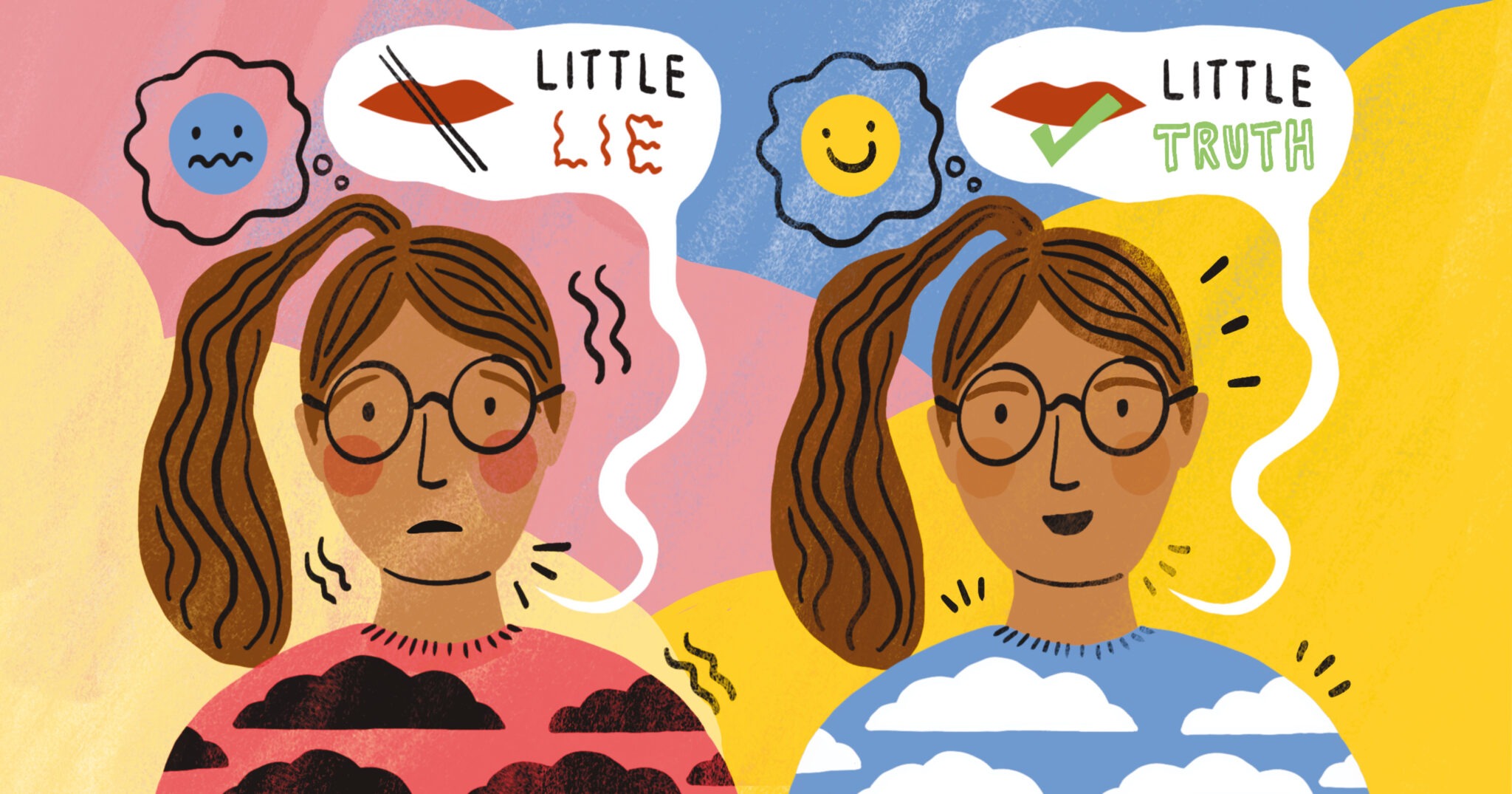
A 2012 study on the Science of Honesty from researchers at the University of Notre Dame in the US found that telling the truth has benefits for physical and mental health. In the study, half the participants were asked not to tell major or minor lies for 10 weeks. The other half weren’t told anything about lying. Each week the participants went to have their health assessed, and to take a polygraph test to assess the lies they had told. A polygraph measures bodily changes associated with lying, such as increased heart rate, blood pressure and faster breathing.
It was found that participants in the no-lie group experienced on average about four fewer mental-health complaints and three fewer physical health complaints than those who were not given any instructions about not lying.
Mental health complaints included issues such as feeling tense or unhappy. Physical health complaints were things like sore throats or headaches. The participants in the no-lie group also reported improvements in their personal relationships, and they felt that their social interactions went more smoothly.
Another study from the British Journal of Social Psychology found that people who lied felt worse about themselves. In the study, participants who told a lie one day had lower self-esteem for five days afterwards.
People usually tell lies in an attempt to make their lives better, but they can end up making life worse. Even the lies that are told in the hope of being kind can lead to less trust and healthy connection.
Trust yourself
Could you take a courageous step, and commit to noticing those moments when you are tempted to tell a lie? What would it be like in those moments to actually tell the truth?
The truth might not look like telling your friend they look awful in their dress, but wording it in such a way that honesty and kindness are combined. For example, remembering the dress they wore last month, and saying you think that one is more pretty. Or, telling your friend that you’ve had a really busy week, and want some quiet time, and that’s why you can’t go to their house, rather than inventing an imaginary illness.
Truth telling can help to build your confidence as you realise it’s okay to be you, it’s okay to admit your own thoughts and feelings. It might even inspire others to do the same!